Service guide · Taasees Consulting · Qatar
Open a Restaurant, Café or Cloud Kitchen in Qatar
Plan a restaurant, café, kiosk or cloud kitchen in Qatar: compare locations, costs and delivery economics, prepare applications and improve existing operations.

Opening a restaurant or café in Qatar starts with a workable operating model. A dine-in restaurant, mall coffee kiosk, drive-through café and cloud kitchen serve customers differently and carry different costs. Taasees Consulting helps assess the concept, compare locations, prepare the feasibility study and organise the agreed leasing, licensing and financing applications. We also review existing food businesses whose sales do not translate into cash or profit.
Restaurant for sale in Qatar: assess the business behind the listing
Buying an existing restaurant may shorten fit-out time, but the purchase price does not establish its profitability. Review sales against collections, delivery commissions, food waste, staffing, rent and required equipment replacement. Separate the current owner's unpaid work from the cost of professional management. Ask how much cash is needed between takeover and stable operations.
Compare the purchase case with a new opening using the same assumptions and review rights, liabilities, licences and lease transfer with appropriate specialists. For commercial rent in Qatar, also consider service charges, deposits, approved use, fit-out obligations and the cost of a delayed opening. Taasees evaluates business proposals and site options provided for review; it does not present these examples as available restaurant listings.
Cloud kitchen Qatar: delivery economics and rented kitchens
A cloud kitchen focuses on preparing orders for delivery rather than selling a seating experience. The model needs to account for ingredients, packaging, platform commissions, discounts, refunds, labour and delivery-related operating constraints. Gross menu sales should not be treated as the amount available to pay rent and staff.
When considering a rented kitchen, compare what the rent includes: equipment, storage, utilities, cleaning, maintenance and access hours. Check which responsibilities remain with the operator and whether the proposed activity can be licensed there. A rental advertisement is not evidence of a valid operating approval. Our service can assess an available proposal; it does not imply that we hold kitchens for rent.
Café, kiosk, drive-through or dine-in restaurant?
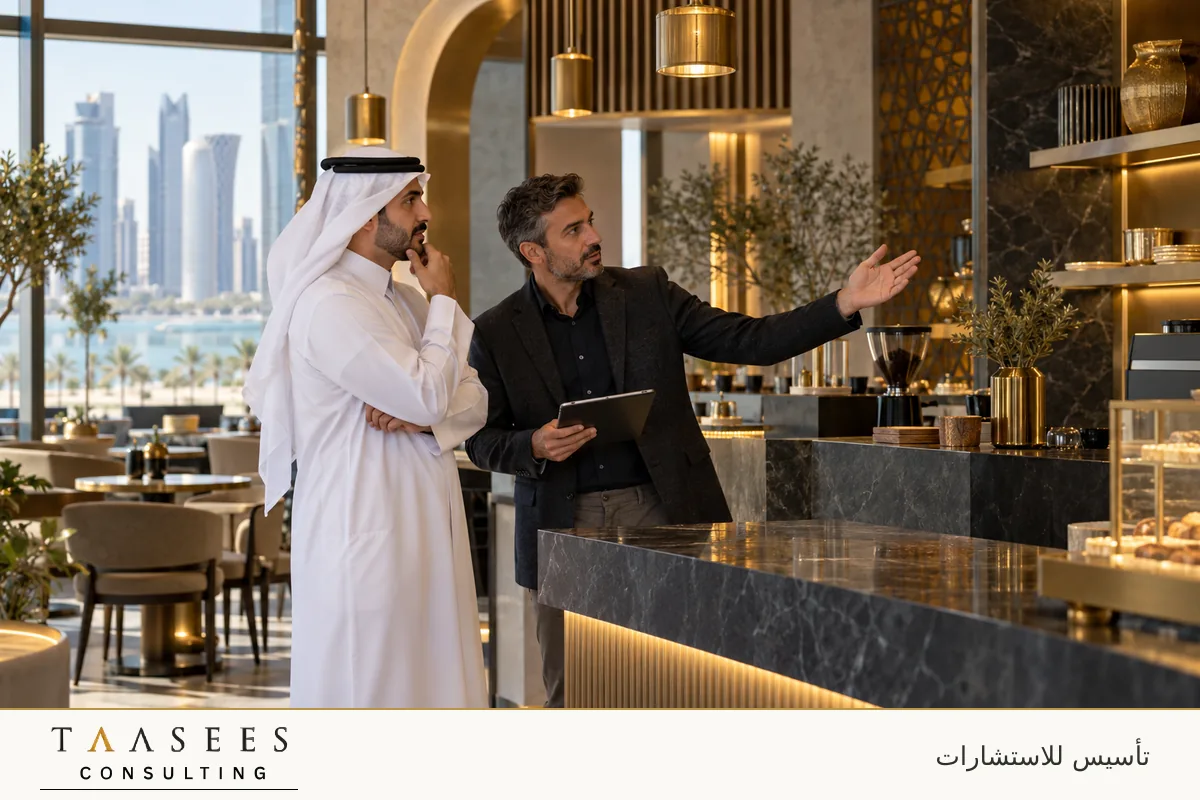
A café with seating depends on customer visits, average spending and the time customers occupy tables. A kiosk has different storage, preparation and queue constraints. A drive-through café requires a practical vehicle and order flow, suitable premises and the relevant approvals. The same revenue and staffing assumptions should not be reused across all three.
For a dine-in restaurant, match the menu to kitchen capacity, staff skills, service time and the intended customer experience. A focused burger, shawarma or coffee concept may have a different investment profile from a broad menu. We test the concept against achievable output and demand rather than assuming that adding more menu items always increases profit.
Comparing sites in Doha, Lusail, The Pearl and malls
Compare actual units and their catchment, access, parking, visibility, lease terms and technical suitability. A district's reputation cannot replace the assessment of a specific location. Residential customers, office workers and mall visitors have different buying patterns, visit times and reasons to return.
The Doha Festival City leasing enquiry is one official route to enquire about a brand and proposed activity. We can organise the business presentation, concept, space requirements and supporting financial file. Availability, lease conditions and acceptance must be confirmed with the landlord; the presence of an enquiry form does not establish that a unit is available.
Opening budget and cost per order
Build the opening budget from fit-out, equipment, deposits, pre-opening expenses, initial inventory and working capital. Compare quotations on a consistent basis and identify exclusions. Delayed opening may create rent and payroll costs before any customer revenue, so the timing of payments matters alongside the total investment.
Calculate the cost of important menu items from recipe quantities, purchasing units, waste and packaging. Then estimate the sales mix rather than using the margin on one popular item as the margin of the entire business. Delivery and dine-in orders may contribute different amounts after commissions, promotions and service costs.
Break-even, staffing and cash-flow risk
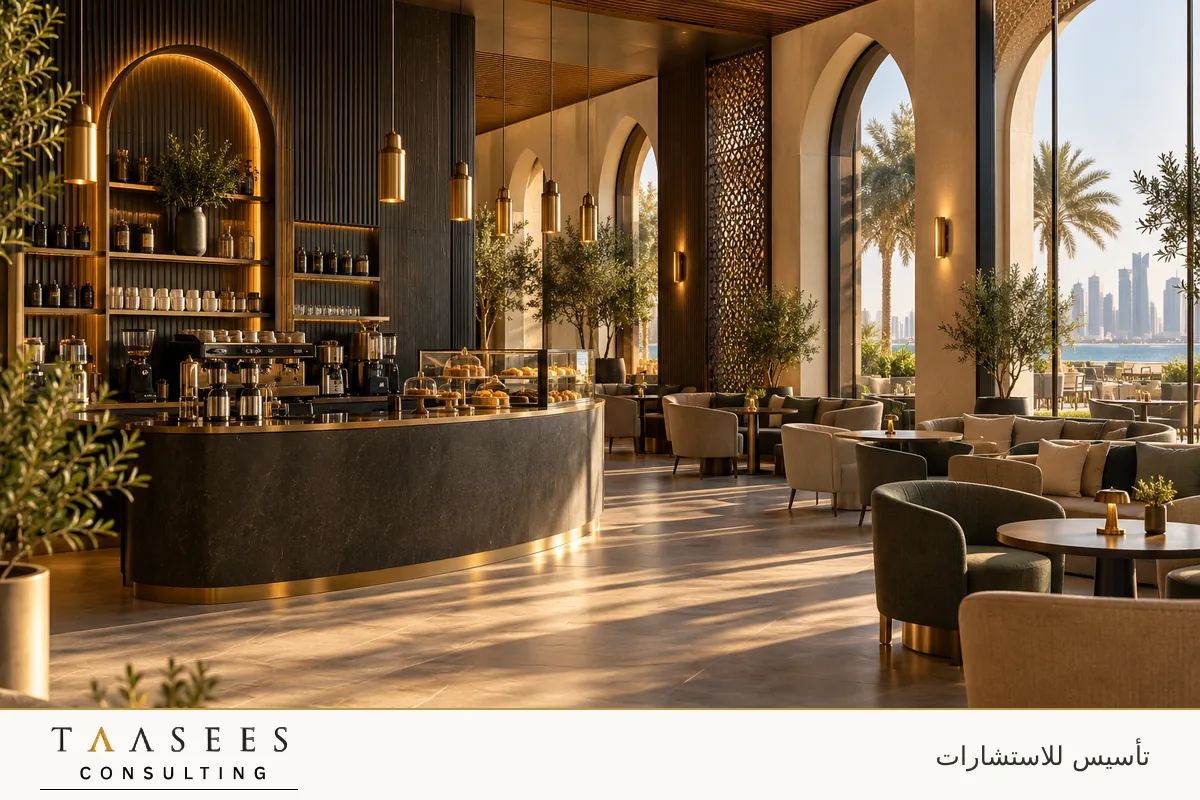
The operating model links orders, average ticket, opening hours and realistic capacity. The bottleneck may be a cooking station or dispatch process rather than seats. Staffing should account for preparation, cleaning, peaks, days off and supervision, with technical and safety requirements checked by the appropriate specialists.
We test lower demand, smaller average tickets, higher food costs, delayed opening and different channel mixes. Break-even is a calculated threshold under stated assumptions, not a promise of customer traffic. Cash-flow scenarios show whether the investor can fund the early months and when a change in menu, size or operating hours would be preferable to committing more money.
Applications, leasing and launch coordination
Taasees can prepare and follow up on the agreed project applications using the appropriate authorisation. The file connects the activity, premises, menu, equipment and financial assumptions. We record outstanding comments and identify decisions needed from the client, landlord, authority or specialist.
Company registration, food-related approvals, site requirements and technical design should be checked for the actual project. We coordinate the commercial and application work within scope; specialist drawings, professional certifications and authority approvals are not replaced by the feasibility study. Financing and leasing decisions remain with the relevant organisations.
Improving an existing restaurant or café
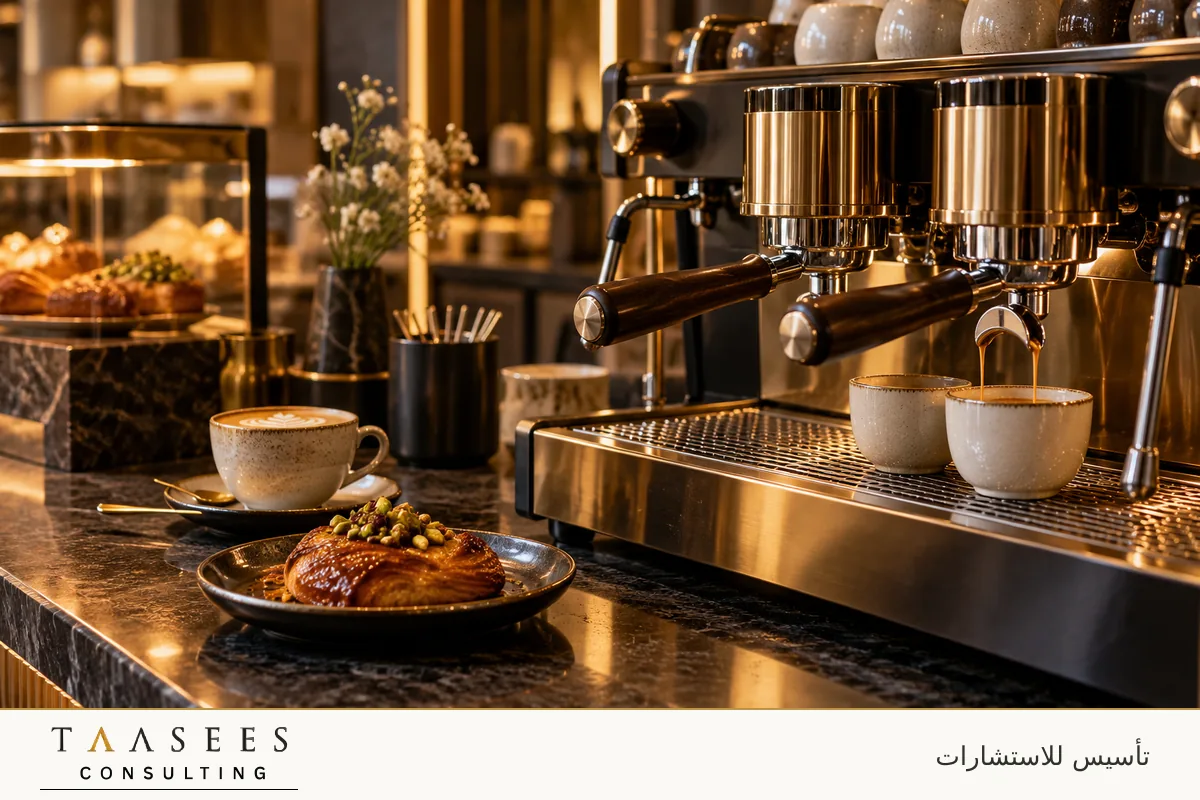
If the business is already open, start with sales by item and channel, purchasing, waste, payroll, rent and collections. A popular venue may still lose money because discounts, delivery commissions, ingredient usage or staffing do not match the price structure. Review the operating evidence before committing to a second branch.
The improvement plan can include recipe costing, purchasing controls, stock counts, daily reporting and clear management responsibilities. This also reduces dependence on the owner for every decision and allows performance to be monitored while the owner is away.
Information, deliverables and frequently asked questions
Prepare the concept, preliminary menu, target customers, premises options, quotations, proposed team and sales channels. Existing operators should include sales, purchasing, waste and expense records. Deliverables may include a site and market comparison, operating assumptions, cost model, scenarios, funding requirements and launch steps, as defined in the engagement.
Can you update a study I already have?
Yes. We review the current site, menu, prices and requirements, then update material assumptions and prepare the relevant application file instead of automatically repeating every part of the study.
Can you provide a fixed opening cost immediately?
A useful estimate needs a defined concept, site and scope. Contact Taasees through the site's WhatsApp or contact option with those details. We can identify the next information needed and quote the appropriate study or follow-up work.